




InfoGov

Must Read

Slide background

Why AI must power
the next wave
of Social Housing
delivery


For years, national housing policy has wrestled with the tension between
aspiration and delivery. Targets have been set and missed; waiting lists
have grown longer,and the most vulnerable people in our society have
been left with fewer safe,affordable places to call home. Technology has a
key role to play to address this situation writes Andrew Lloyd
of Search Acumen.

Why AI must power
the next wave
of Social Housing
delivery

For years, national housing policy has wrestled with the
tension between aspiration and delivery. Targets have been
set and missed; waiting lists have grown longer, and the
most vulnerable people in our society have been left with fewer
safe, affordable places to call home. Technology has a
key role to play to address this situation writes Andrew Lloyd
of Search Acumen.

Analysis

Managing SARs and LADO investigations

Bethany Paliga and Claire Archibald provide a guide for schools on dealing with subject access requests and LADO investigations.
Managing SARs and LADO investigations

Redacted rights: When does Article 10 ECHR confer a right to information?

A three-judge panel of the Upper Tribunal (Lady Poole, UTJ Citron and UTJ Brewer) in Cruelty Free International v Information Commissioner & Home Office [2026] UKUT 328 (AAC) has held that Article 10 ECHR can, in narrow circumstances, confer a right to receive information from a public authority - but that this particular Appellant still cannot have any. Georgina Pein analyses the ruling.
Redacted rights: When does Article 10 ECHR confer a right to information?

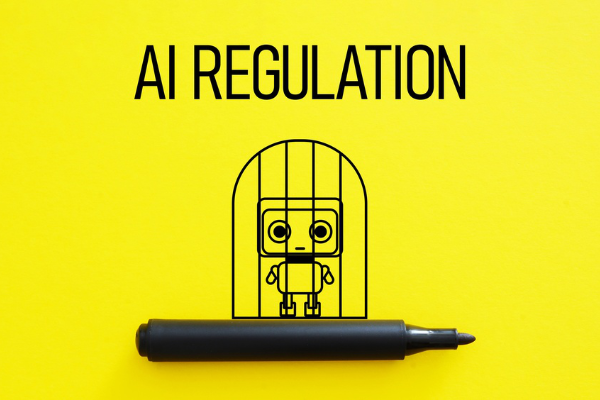
Will the UK change its course on AI regulation?

Draft legislation that would prohibit the “development, deployment and operation of artificial superintelligence systems” has been introduced into UK Parliament as a private member's bill. Oscar Tang and Stefanie Hughes look at what it might mean for the development of UK government AI regulation policy.
Will the UK change its course on AI regulation?
Data gold shutterstock 2309529021

Worth Your Data in Gold

Barristers Jennifer Thelen, Philip Dayle and Steph David offer practical solutions to pleading and quantum in data protection claims, considering the relative advantages of differing routes of redress in data protection claims, as well as the recent case law considering how to value data protection claims.
Worth Your Data in Gold
RCJ 600 x 400 shutterstock 2330605839

Publication of judgments in care proceedings

A High Court judge in the Family Division recently considered the question of the extent to which judgments he had handed down should be anonymised and whether the transparency order in force in respect of care proceedings should be varied accordingly. Molly Giles considers the key points from the ruling.
Publication of judgments in care proceedings
AI decisions103731582 s

AI in education: the importance of transparency

The debate around AI in education often focuses on capability. What can it do? How much time can it save? Yet some of the most important questions are not technical at all. Adam Halsey looks at why transparency should come before implementation.
AI in education: the importance of transparency
Artificial Intelligence AI Futuristic Technology 3D Style Voxel Art Text Design Gray Monochrome Icon with Shadow Effect in Isometric Perspective View

Shadow AI in the workplace: the risks for public sector employers

The use of AI tools by staff and contractors without formal organisational approval is a growing risk with serious consequences for the public sector write Declan Goodwin and Frederick Lambert.
Shadow AI in the workplace: the risks for public sector employers
Complaint button shutterstock 1499251934

The New Data Protection Complaints Regime

From Friday, 19 June 2026, organisations can no longer rely on complaints going straight to the ICO. The Data (Use and Access) Act 2025 introduces a new regime requiring them to receive, investigate and resolve data protection complaints themselves. Maggie Burns and Charlotte Smith explain what you need to know.
The New Data Protection Complaints Regime

Case Management doesn’t stop at the case

Why collaboration, communication and visibility are becoming increasingly important across legal and public sector services.
Case Management doesn’t stop at the case
Businesses use digital systems to manage candidate profiles and resumes for recruitment. HR technology and automation for the hiring process.

Key Data Protection Issues for Automated Recruitment in the Public Sector

The need to recruit faster in a competitive market, the need to minimise costs in the recruitment process, and the need to secure the best candidate quickly, makes the use of AI an appealing option for any employer including public bodies. But there are pitfalls for the unwary write David Leach and Charlotte Smith.
Key Data Protection Issues for Automated Recruitment in the Public Sector

Webinar

The Data Use and Access Act 2025 introduces a new right to complain, which will come into effect on 19 June 2026. This right elevates data protection complaints from an internal process issue to a matter of legal compliance, with all organisations requiring a consistent, robust, and well-documented complaints framework in place.

Ward Hadaway partner Phil Tompkins and solicitor Lucy Baxter discuss the main points of this new right to complain in our on-demand video.

Sponsored articles

Please enter the email address associated with your User account. Your username will be emailed to the email address on file.